Romanesque Architecture in Sardinia
Between the 11th and 13th centuries, Sardinia experienced an extraordinary building season that left the island with over 150 Romanesque monuments — cathedrals, basilicas, parish churches and rural chapels. This heritage, unique in the Mediterranean world for its density and quality, lies at the heart of APS Itinera Romanica's research, outreach and conservation work.
Sardinian Romanesque is not a single unified phenomenon. It is the result of a remarkable encounter between local patrons from the four giudicati (the medieval kingdoms of Cagliari, Torres, Arborea and Gallura), craftsmen arriving from mainland Italy and southern France, and an indigenous building tradition that was able to absorb and reinterpret outside influences in genuinely original ways.
Origins: the Giudicati and the monastic orders
The birth of Sardinian Romanesque is inseparable from the island's medieval political structure. From the mid-10th century onwards, Sardinia was divided into four autonomous kingdoms known as giudicati, each ruled by a judike. Seeking both political legitimacy and religious prestige, these rulers actively encouraged the arrival of monastic orders from the Italian mainland: Benedictines from Montecassino, Camaldolese, Cistercians, Victorines from Marseille and Vallombrosans.
The monks brought with them master builders — Pisans, Lombards and Provençals — who introduced new techniques, forms and architectural models, triggering a building boom of remarkable intensity within just a few decades. The Giudicato of Torres was among the first to embrace this transformation: as early as 1063, judike Barisone I granted lands to the monks of Montecassino, setting in motion the first phase of northern Sardinian Romanesque.
Influences: Pisa, Lombardy, Provence
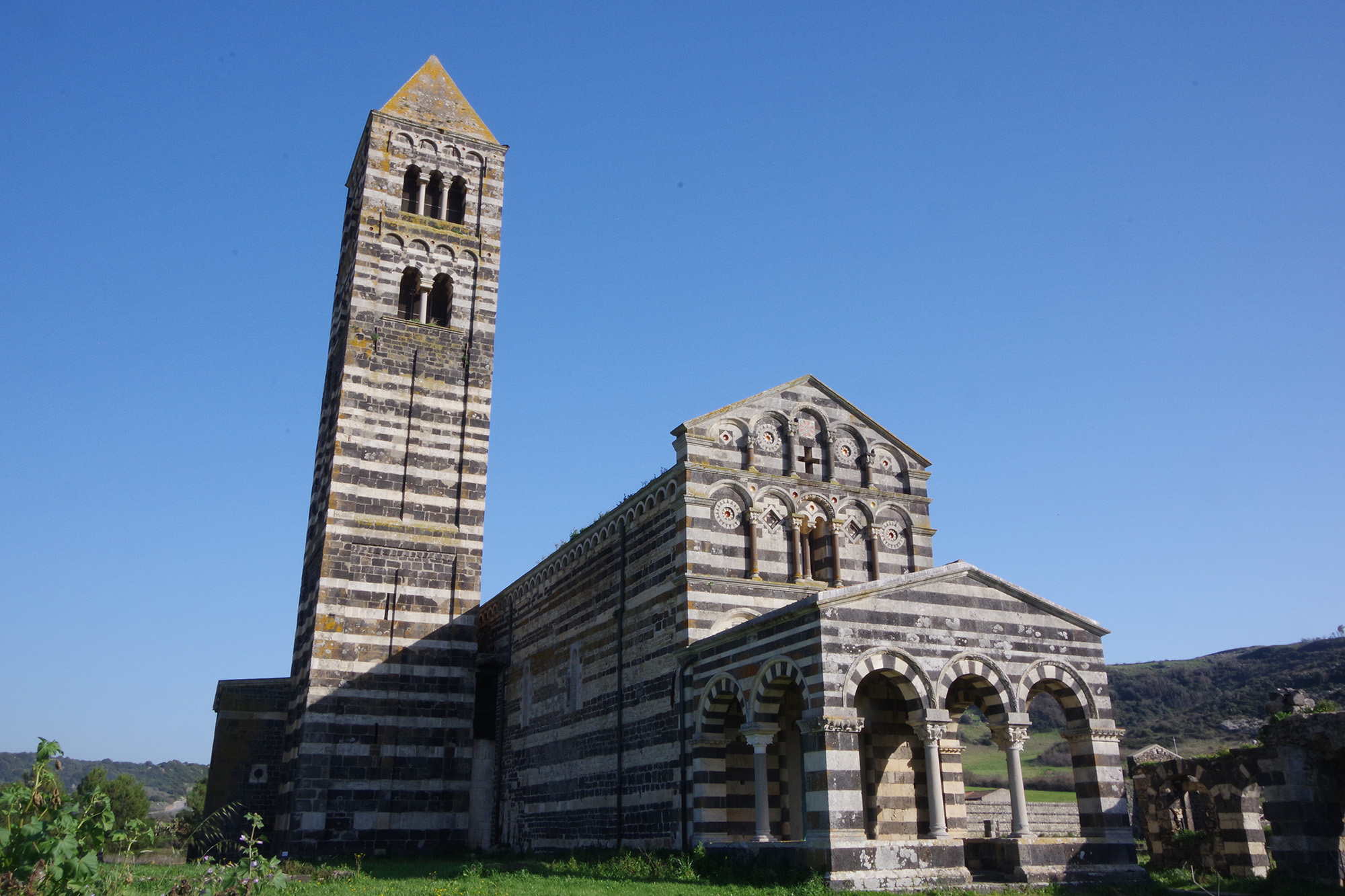
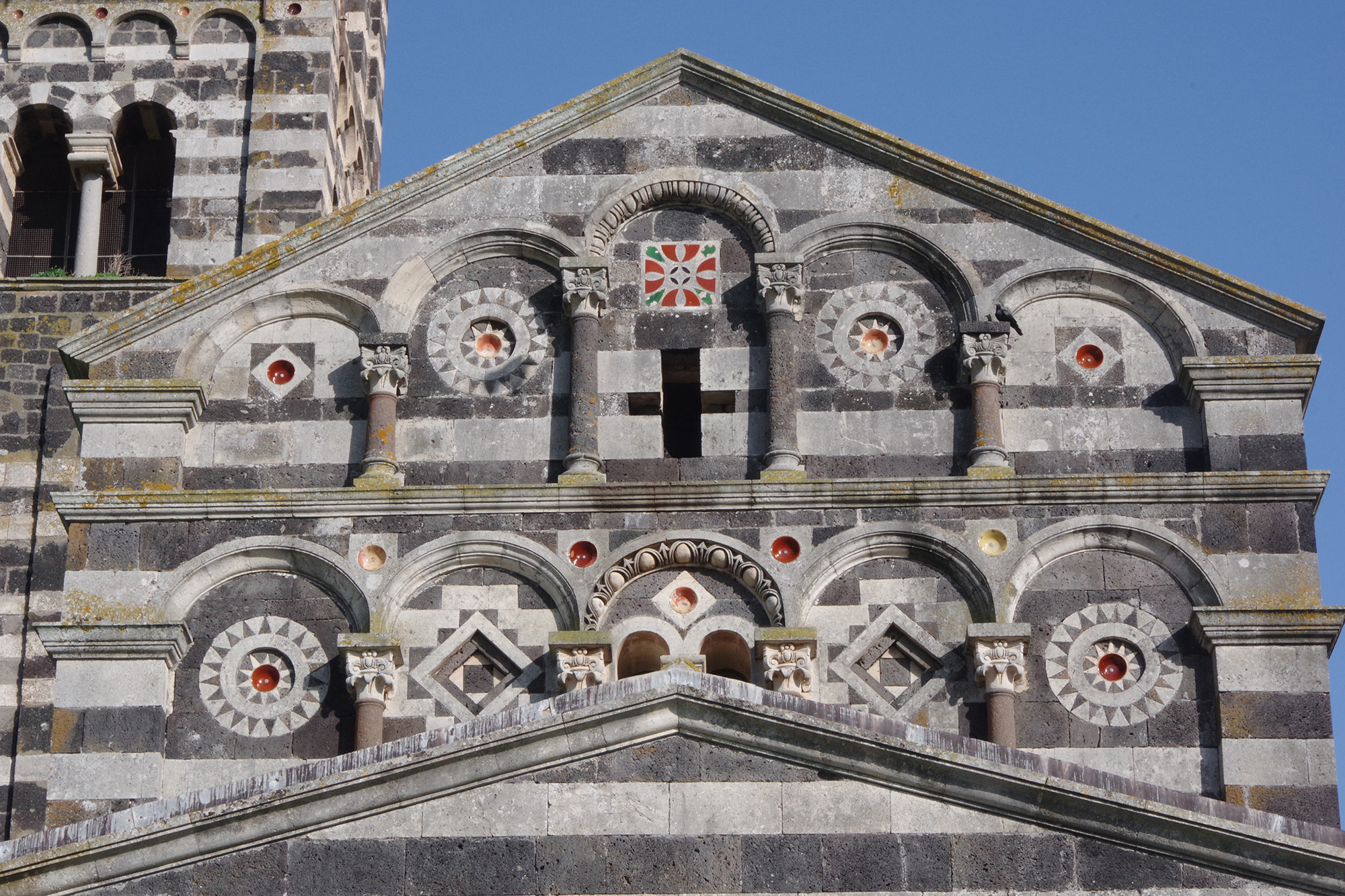
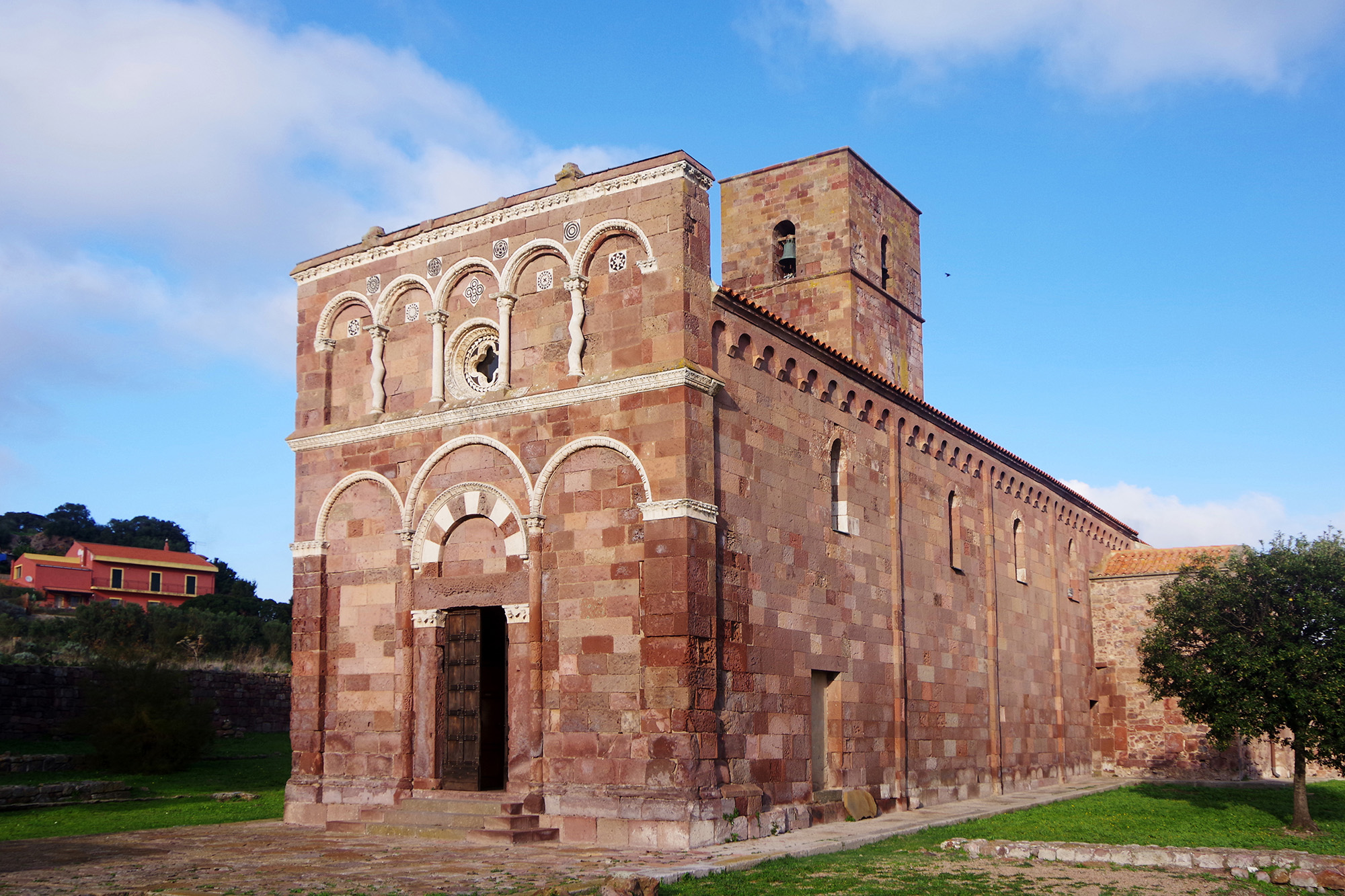
Sardinian Romanesque can be read through three main stylistic currents, often present within the same building. The Pisan influence is the most pervasive: Pisa, commercially dominant across the Tyrrhenian Sea, exported its taste for bichrome striped facades, blind arcading and intricate stone carving. Saccargia, with its alternating courses of pale limestone and dark basalt, is the most celebrated expression of this tendency.
The Lombard tradition contributed pilaster strips, vertical stone bands and slender bell towers, recognisable in many churches of the Logudoro and Meilogu regions. The Provençal presence, more subtle, can be felt in the spatial organisation of interiors and in certain sculptural details, particularly in churches connected to the Abbey of Saint-Victor in Marseille.
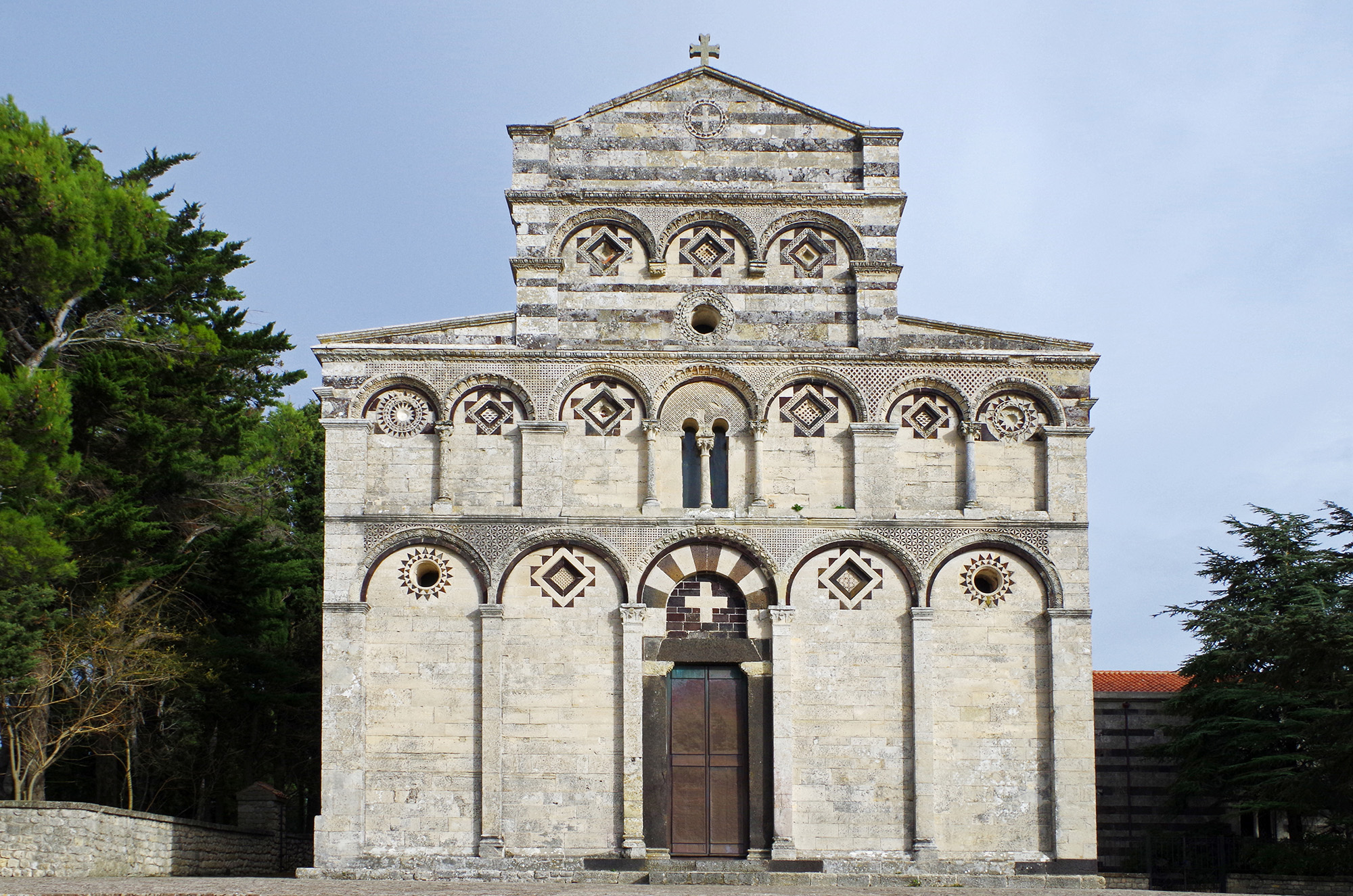
From the second half of the 12th century, the bichrome technique — alternating courses of light and dark stone — became increasingly widespread, a hallmark so distinctive it almost functions as a signature of mature Sardinian Romanesque.
Key monuments
Among the more than 150 documented sites, several monuments stand out for their historical significance and architectural quality.
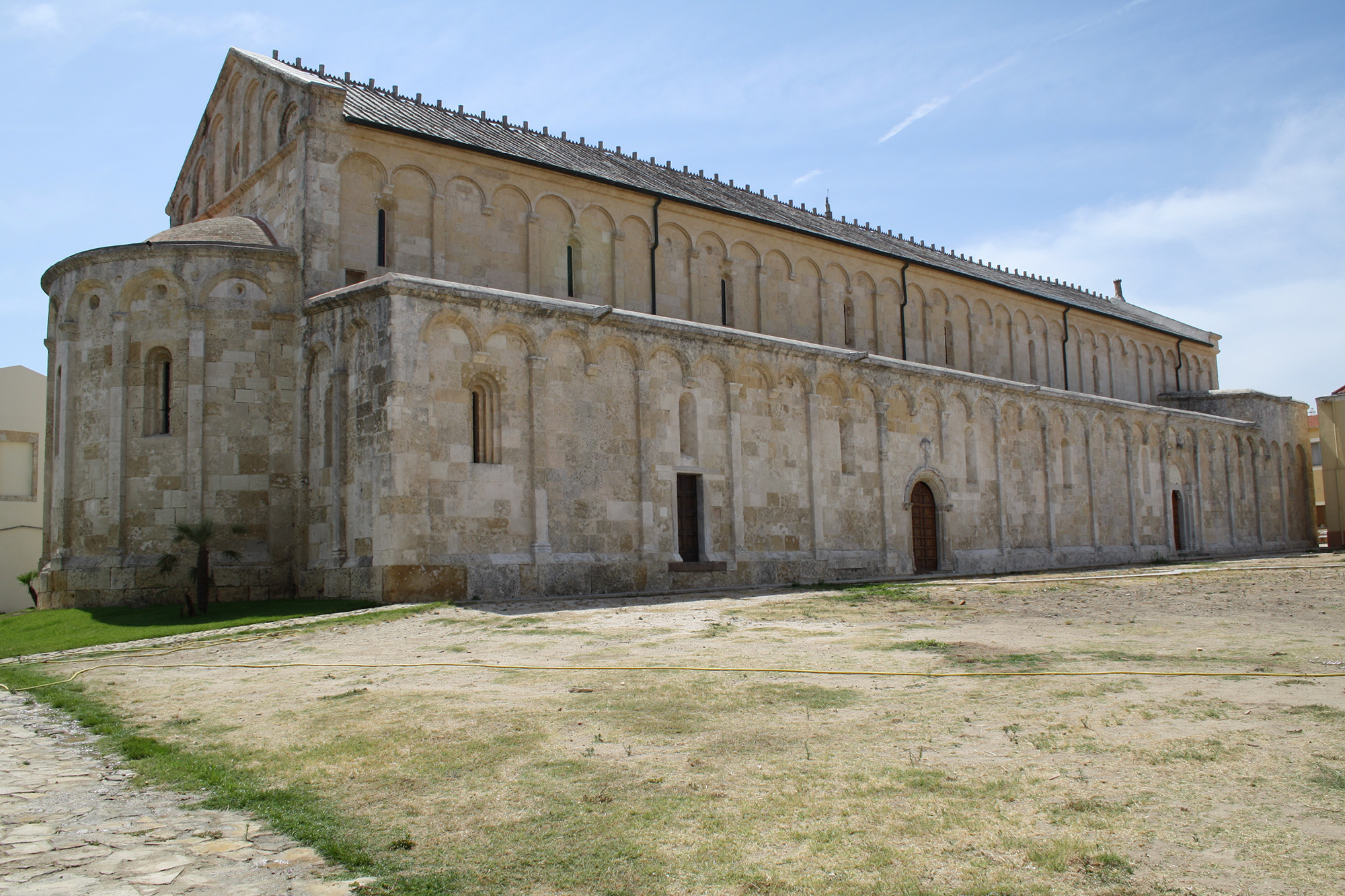
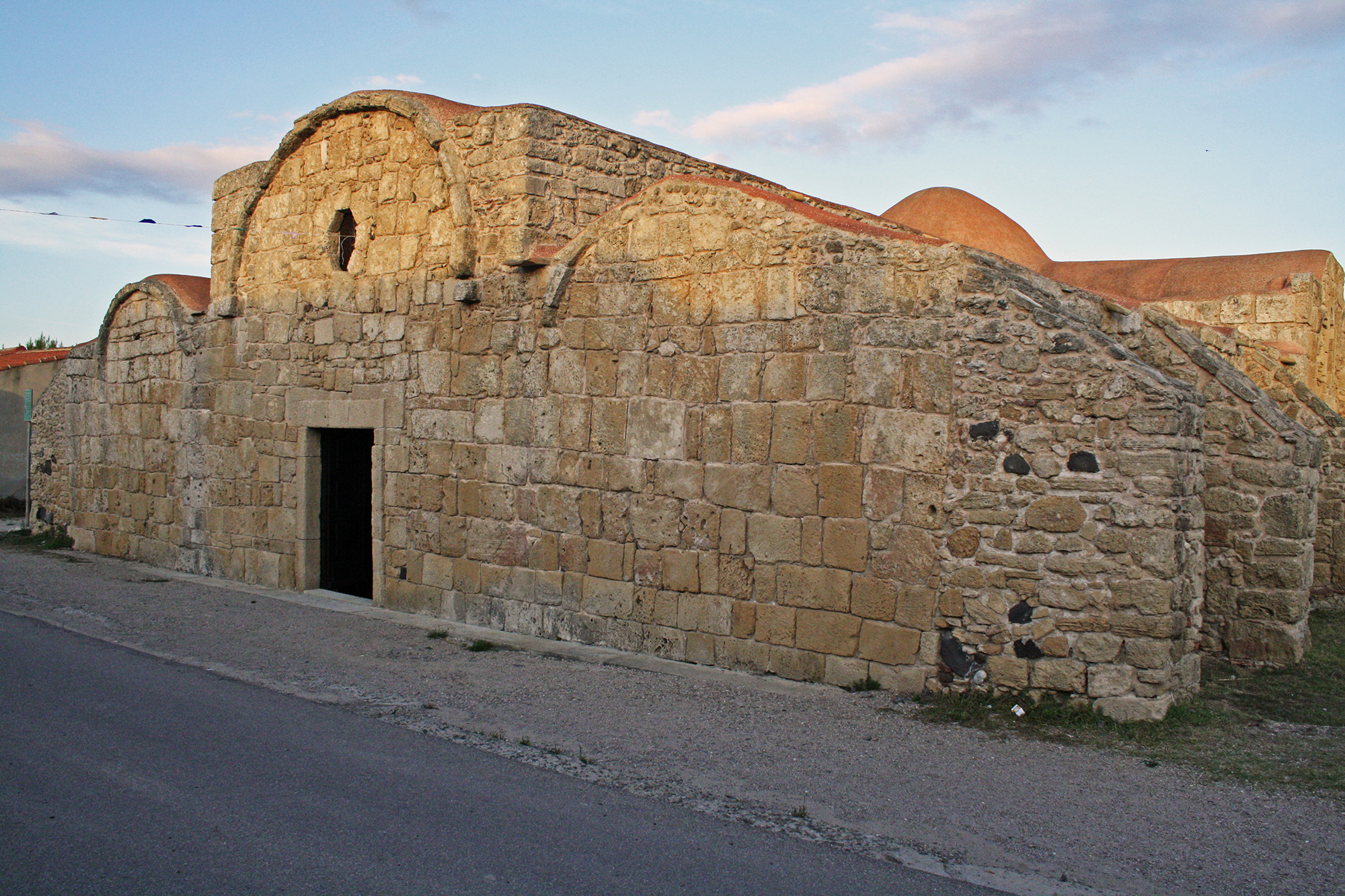
The Basilica of San Gavino in Porto Torres (11th century) is the oldest and most imposing Romanesque building in Sardinia. Lacking a traditional facade, it features two opposing apses at either end — a form rooted in North African early Christian models, reinterpreted in a Romanesque key.
The Basilica of the Holy Trinity of Saccargia in Codrongianos (12th century), built by Camaldolese monks, is the most celebrated for its bichrome stonework and for the apse frescoes — the only surviving example of Romanesque mural painting in Sardinia.
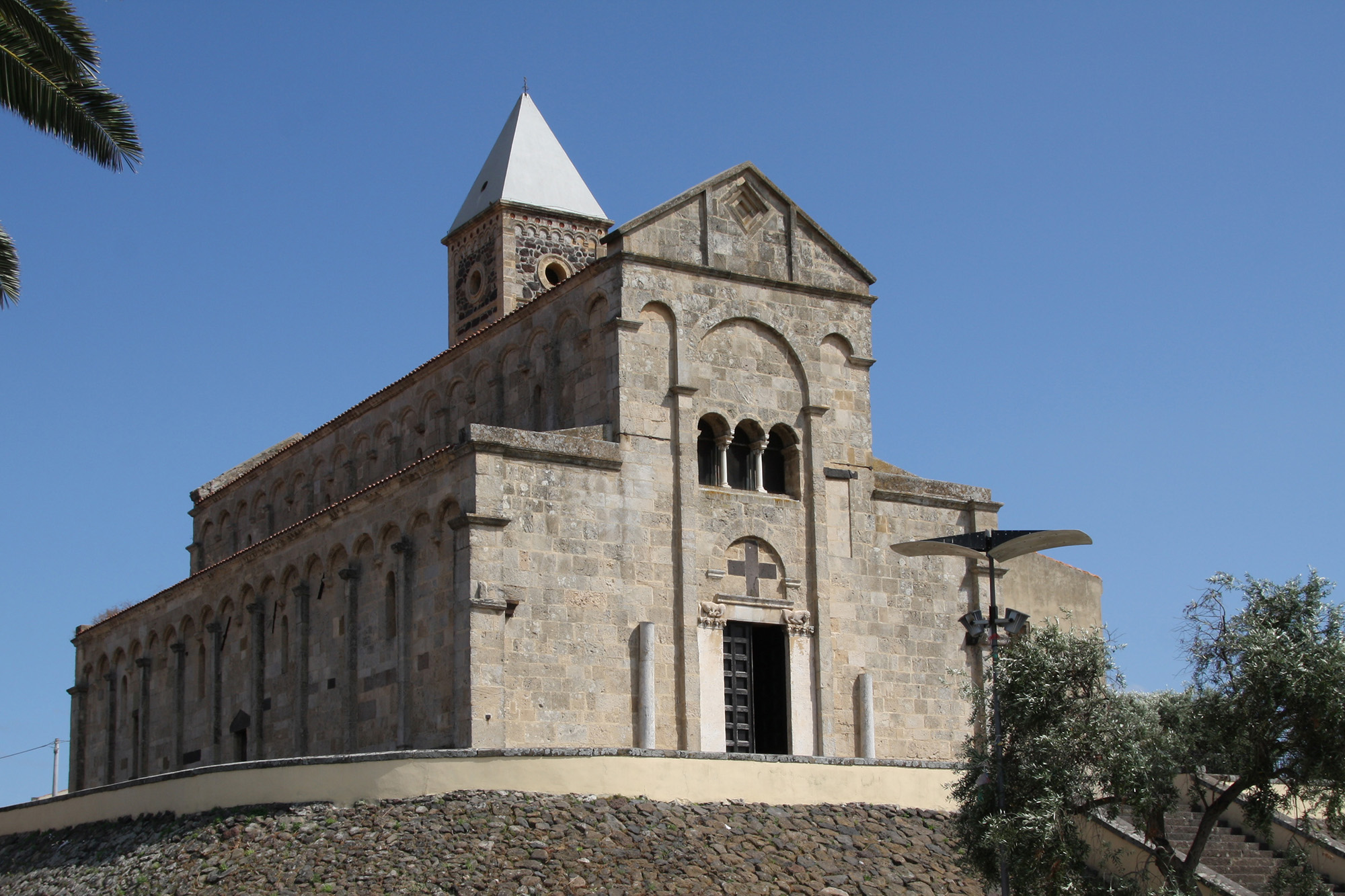
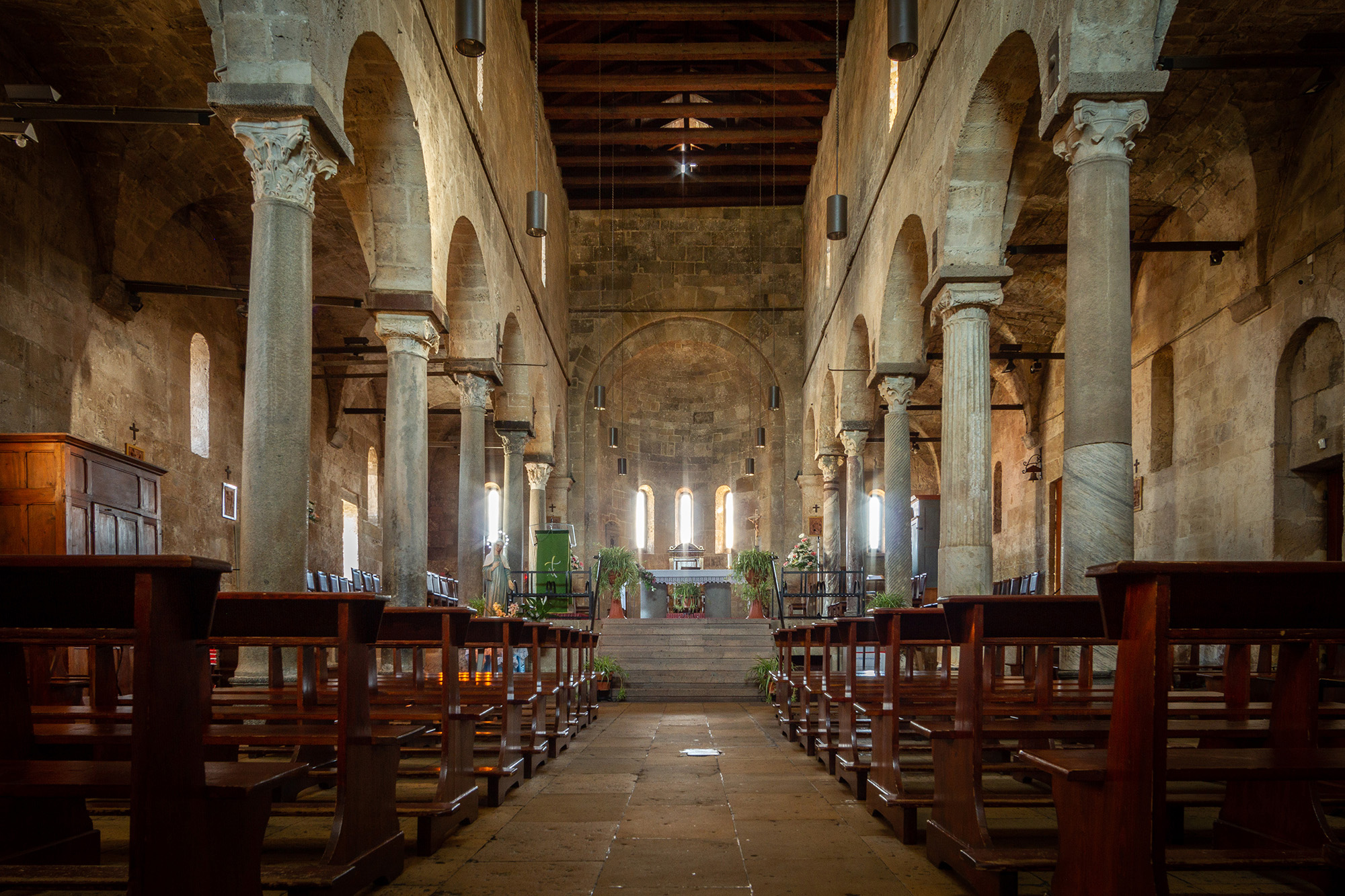
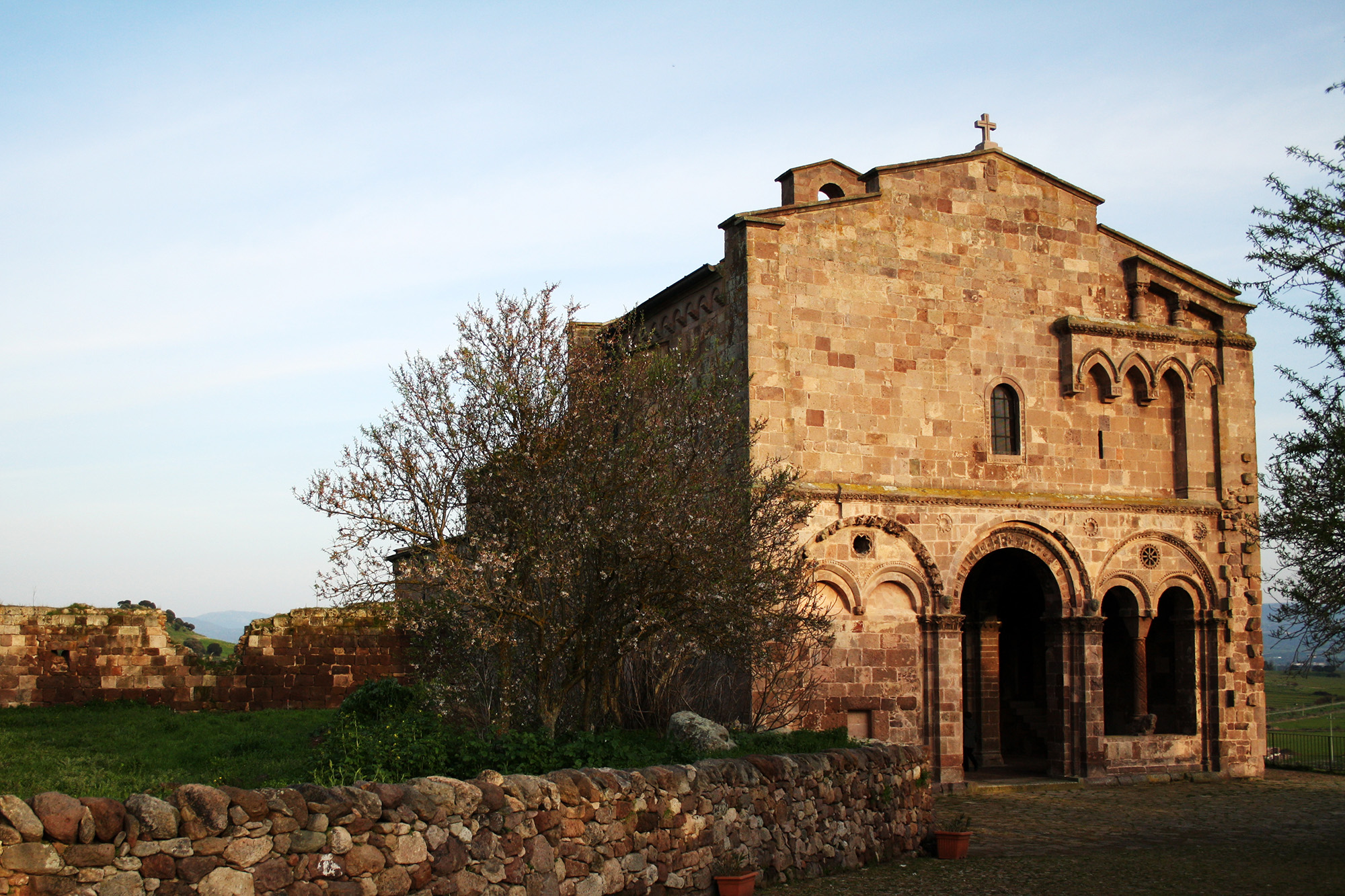
The Cathedral of Santa Giusta (OR, 12th century) is a masterpiece of Pisan Romanesque in the Campidano plain. Its crypt, supported by columns reused from Roman-era buildings, and the sober elegance of its facade make it one of the most significant monuments of the Oristano area.
San Pietro di Sorres in Borutta (SS) rises dramatically from a basalt plateau overlooking the Tirso valley. Its tripartite facade with blind arcading and zoomorphic carvings is among the richest examples of mature Sardinian Romanesque.
The Church of San Pietro in Zuri (OR, 1291), dismantled stone by stone in the 1920s and rebuilt on higher ground to save it from the rising waters of the Tirso reservoir, preserves inscriptions that record with exceptional precision its patron, architect (Anselmo da Como) and date of consecration.
Rural churches: the minor Romanesque
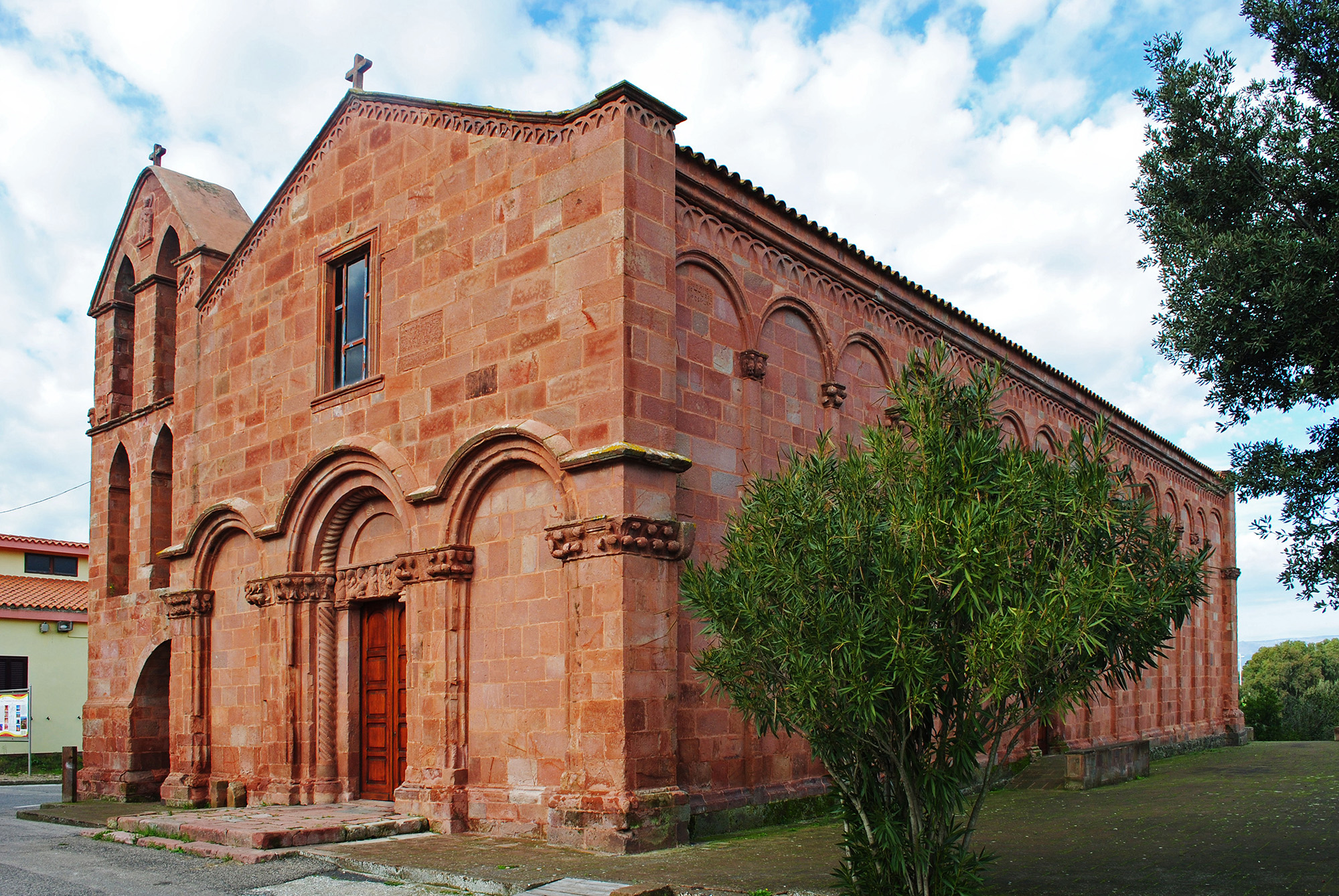
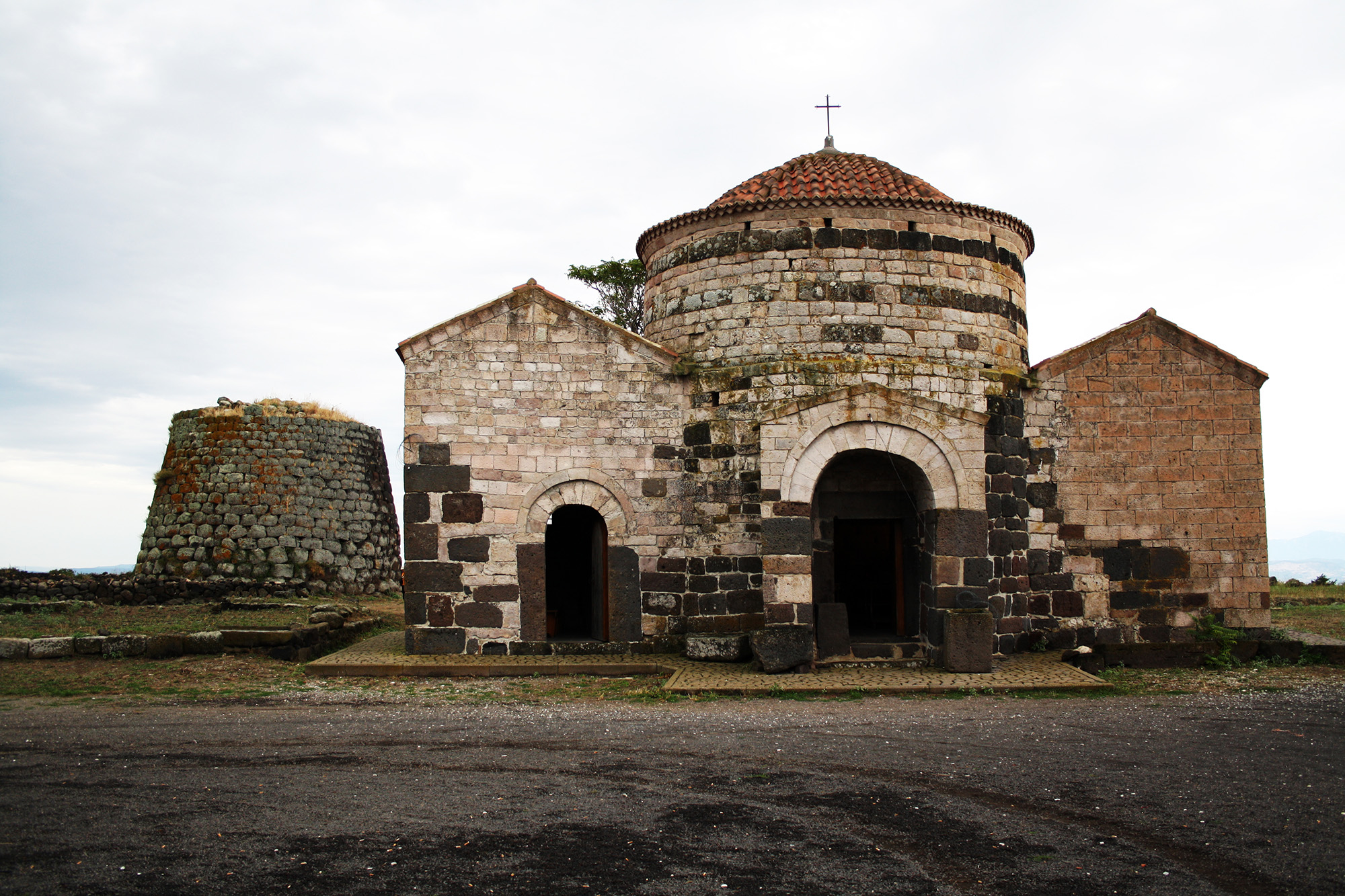
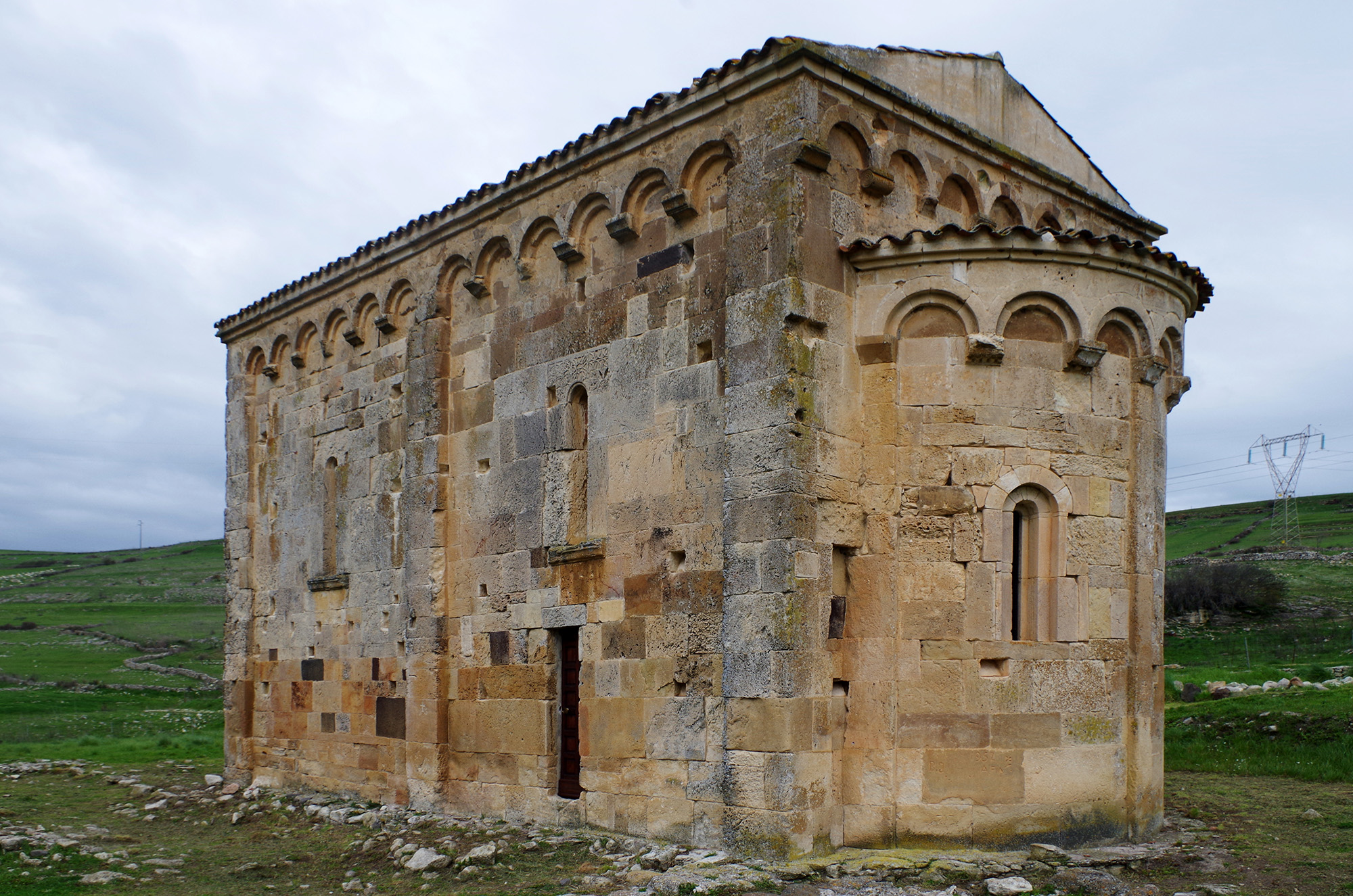
Alongside the great cathedrals, Sardinian Romanesque finds powerful expression in the hundreds of small rural churches scattered across the countryside — single-nave buildings with semicircular apses oriented east, built from local materials (trachyte, basalt, limestone) by craftsmen who reinterpreted the forms of the great building sites with solutions that are often strikingly original.
Many of these country churches are still the setting for traditional religious festivals rooted in popular devotion. Together they represent the island-wide reach of Romanesque culture and constitute a fragile, precious and in many cases still imperfectly studied heritage.
Discover Sardinian Romanesque with us
Since 2012, APS Itinera Romanica has been organising guided excursions to Romanesque sites across Sardinia, led by licensed tourist guides and subject-matter specialists. Excursions are reserved for members and are designed to give full attention to the historical and artistic character of each site.
The Pomeriggi del Romanico (Romanesque Afternoons) — an annual lecture series held in collaboration with the Museo Diocesano Arborense and the University of Cagliari — offer each year a scholarly exploration of a specific theme in Sardinian medieval history, open to the general public.
The travelling festival ExtraMuros – The Middle Ages Beyond the Walls brings medieval history to seven municipalities across Sardinia through talks, performances and community events.
Would you like to join our excursions or explore Sardinian Romanesque with us?
Become a member Our excursions Romanesque Afternoons ExtraMurosSources and further reading
- Roberto Coroneo, Architettura romanica dalla metà del Mille al primo '300, Nuoro, Ilisso, 1993.
- Renata Serra, Sardegna Romanica, Milan, Jaca Book, 1988.
- Raffaello Delogu, L'architettura del medioevo in Sardegna, Rome, 1953 (anastatic reprint, Sassari, 1988).
- Roberto Coroneo – Renata Serra, Sardegna preromanica e romanica, Milan, Jaca Book, 2004.
- Dionigi Scano, Chiese medioevali di Sardegna, Florence, 1929.
- Enciclopedia dell'Arte Medievale, Istituto dell'Enciclopedia Italiana, Rome, 1991–2002, entries «Sardegna» and «Romanico».